A grain of wheat falls into the earth and must die… before it can bear fruit.

Forty-four days in Vietnam. Six cities. Two flights, two sleeper buses, two limousine buses, and more motorbike rides as a passenger than I could ever count.
I arrived in Ho Chi Minh City about a week late after waiting on a visa in Bangkok, but I kept the original plan and just picked up where the reservation left off.
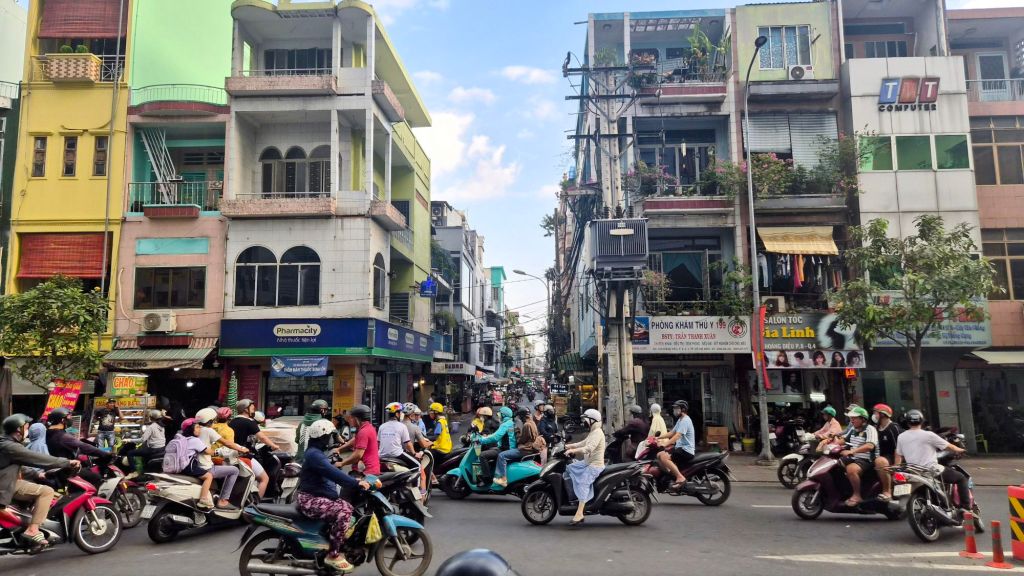
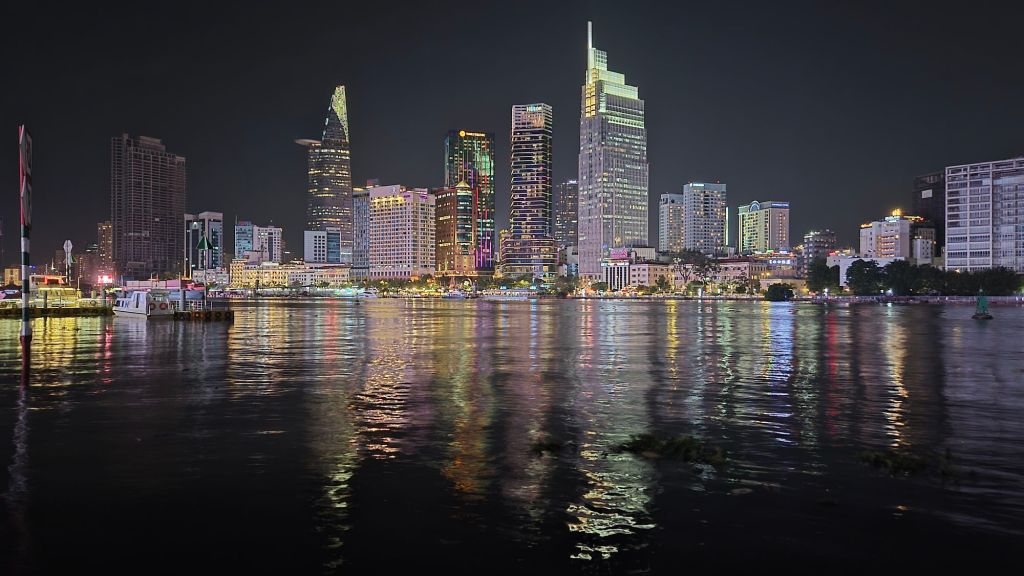
Immediately, my head started spinning. I thought Bangkok was busy, but Saigon took it to a level I couldn’t have imagined. The city moved fast. The traffic was constant. The noise never stopped. From the drive from the airport alone, I couldn’t go ten seconds without hearing a horn, and most of the time it was every two or three seconds. At any red light there were what felt like a hundred motorbikes stacked at the front, and when the light changed, everything flowed like a river. No lanes, no hesitation, just movement. You didn’t stop traffic—you stepped into it, and it moved around you. It was controlled chaos, and it hit my nervous system immediately. What the hell is going on here?
Da Nang slowed things down a bit. It opened up. There were views, coastline, space to breathe. The Dragon Bridge stretched across the city, and on weekends it came alive with fire and water pouring from its mouth. I spent fifteen days there, often near the beach, trying to settle into some kind of rhythm.
Around day ten, I started to get sick. Nothing extreme, nothing that knocked me out completely, but I wasn’t right. I couldn’t pinpoint it. It lingered. It faded a bit during my time in Phong Nha, especially once I got into the jungle, but it never fully left.
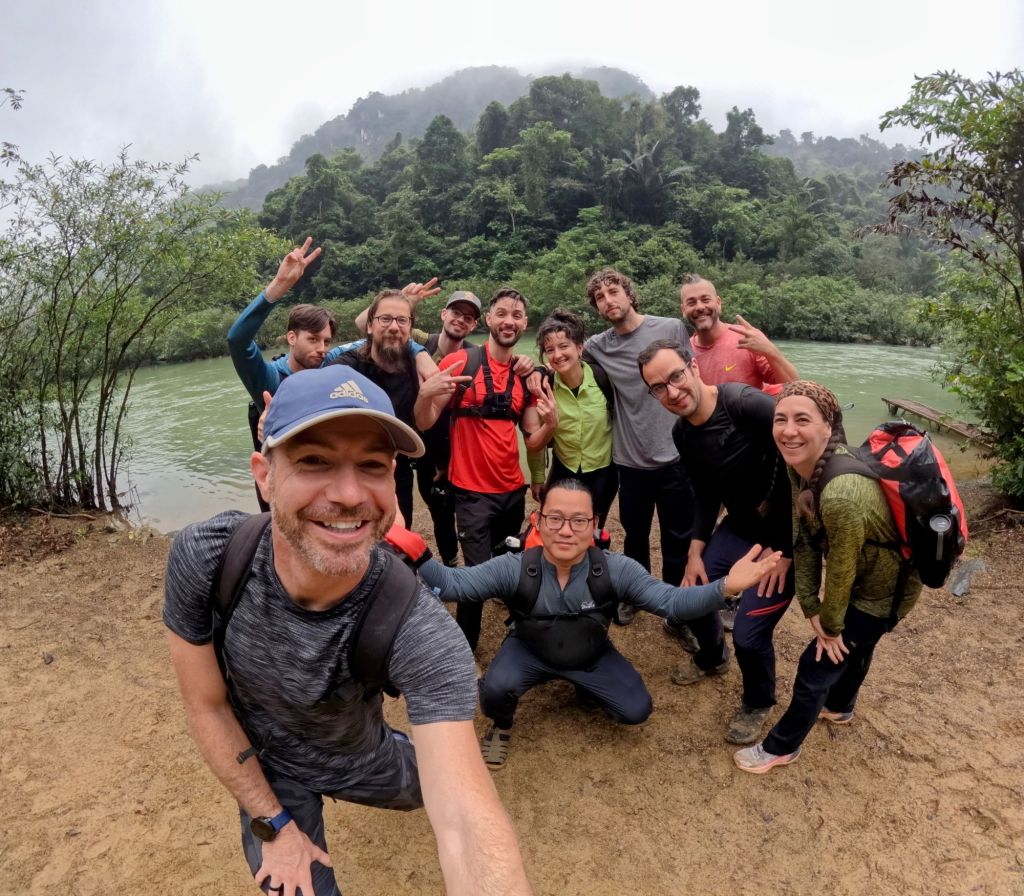
Phong Nha was different from anything I had experienced. Deep jungle. Thick green in every direction. Silence in a way I hadn’t realized I was missing. No constant horns, no endless movement, no pressure. I was surrounded by a small group, all English speakers, and for a few days I felt like myself again. We were on trails, in caves, moving through places that felt untouched. It reset something, even if only temporarily.
But as soon as that trek ended, whatever I had been fighting came right back.
All of this was happening while I was trying to stay on track with training. A month earlier in Thailand, I had slipped on a rain gutter and badly sprained my ankle. The focus immediately shifted to protecting it so I wouldn’t have to cancel the jungle trek. I managed workouts, worked around the injury, and slowly built back into running, but everything was limited. Shorter runs. Controlled effort. Constant awareness of soreness the next day.
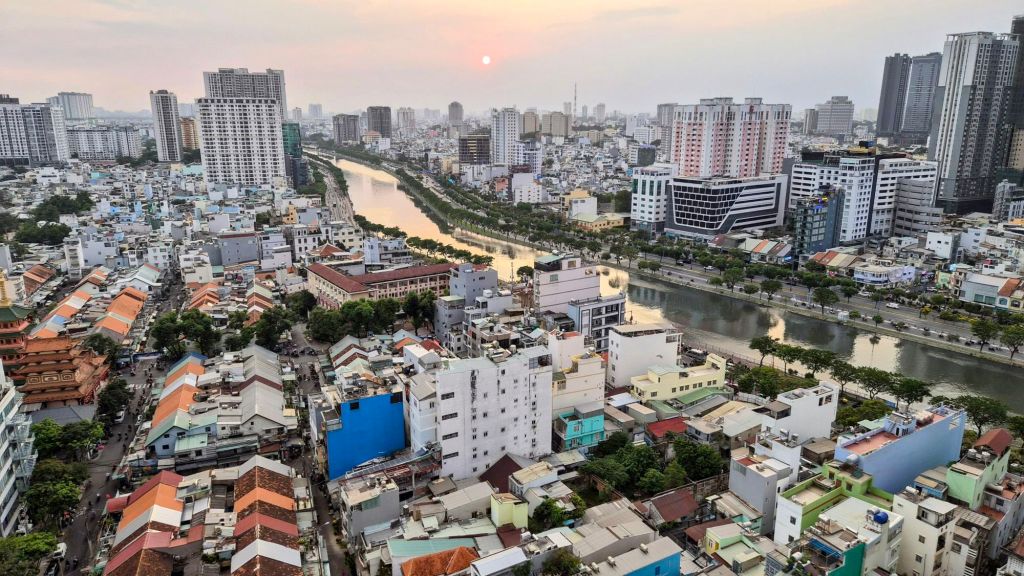
By the time I got to Hanoi, I had three weeks there, and I was trying to push through everything at once. The illness that wouldn’t fully leave, the ankle that wasn’t fully healed, and a training plan that was already behind. I had signed up for a 60K race in Indonesia, and the gap between where I was and where I thought I should be started getting louder in my head.
Workouts turned into maintenance instead of progression. Runs stayed capped around an hour. My HRV was dropping, my heart rate was climbing, and even simple things like coffee would leave me shaky and nauseous. I was doing everything I knew to do—sleep, recovery, discipline—but nothing felt like it was clicking. I wasn’t fully sick, but I wasn’t healthy either. Just stuck in this middle ground that wouldn’t move.
And that’s when the spiral started.
I’ll never be ready for this race. I’m too far behind. What’s wrong with me? Why isn’t this working?
That loop repeated itself over and over. Not loud at first, but consistent. And once it gets consistent, it gets powerful.
With about ten days left in Vietnam, I had to step back and take inventory. Something had to change. Not externally, but internally. I planned a short trip out of Hanoi to Ninh Binh and Ha Long Bay, but more importantly, I made the decision to slow everything down. No schedule. No constant planning. No forcing workouts. No trying to control every variable. That alone felt uncomfortable, because I’m used to solving problems by doing more, not less. But at that point, everything I looked at had become a nail, and I needed to put the hammer down.
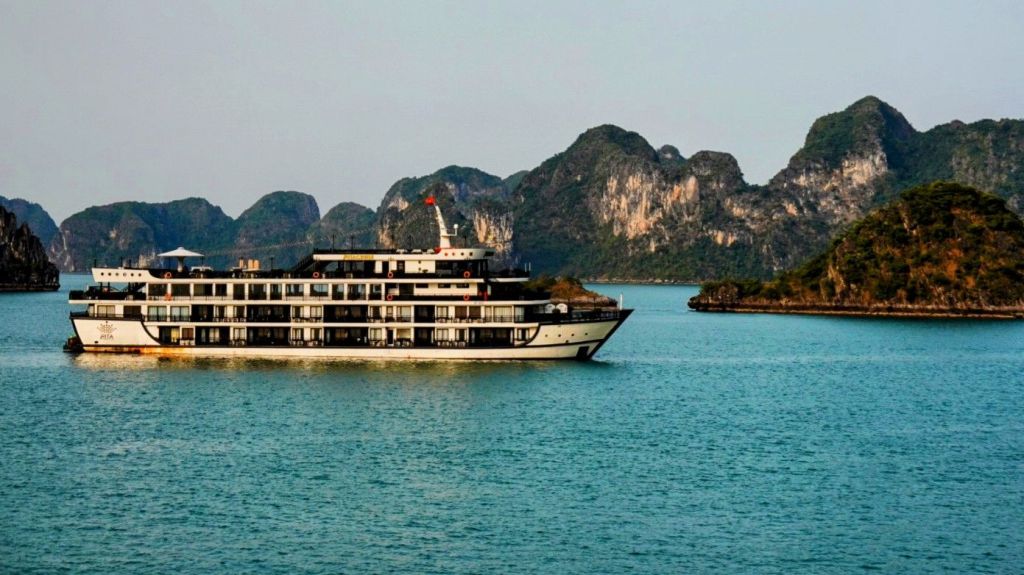
Ninh Binh gave me space. The countryside, the rock formations, the quiet—it helped. Ha Long Bay was incredible, but it also introduced another layer I hadn’t dealt with yet on this trip. The cost. For the first time, everything felt like a transaction. Prices jumped. Every interaction felt like someone reaching for something. It caught me off guard, and I let it get to me more than I should have.
Then I lost the drone.
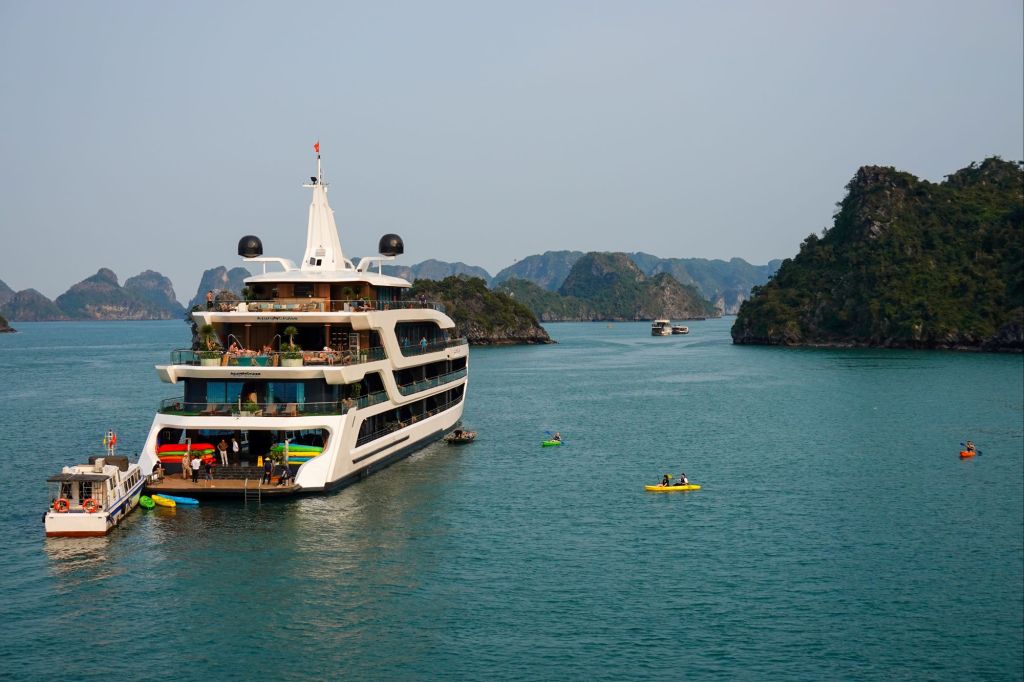
Standing on the boat, watching it hover just above the water as the signal dropped and the battery faded, I had about fifteen minutes of complete self-induced panic. There was nothing I could do. I knew that. But knowing it and accepting it are two different things. When it finally went down, I just stood there, embarrassed, frustrated, replaying it in my head.
Back in the room, I gave myself a few minutes to feel it, and then I caught it. Six hundred dollars. Gone. So what. It’s plastic. It’s replaceable. Why am I letting this control how I feel?
That shift happened quickly once I allowed it to. I packed up what was left of the gear and decided to send it home. Drone controller, tripod, anything that wasn’t serving me anymore. And again, another hit. Shipping with batteries? Prices jumped instantly. Two hundred sixty-one dollars to send it back. Nothing I could do. Another decision, another lesson.
But once it was gone, I felt lighter. Mentally more than anything.
There were a few of these moments on this trip where things stacked up in a way that made me feel completely powerless. Like no matter what I did, the outcome was already decided. But the more I sat with that feeling, the more I realized that even when the situation itself is out of my hands, my response never is. That’s where ownership comes in. Not ownership of what happened, but ownership of how I choose to carry it forward.
By then I had already reached out to the race directors and dropped down to the 27K. Not the plan I started with, but the honest decision based on where I was. No ego, just reality.
My last day in Hanoi, I still wasn’t feeling right. Sleep was broken. Energy wasn’t there. So I went for a long walk around the lake. No destination, no timeline, just movement. I started zooming out on everything—my attitude, my reactions, the constant loop I had been running in my head.
And I asked a simple question: what if this isn’t just physical?
Not the main cause, but a contributor. The constant tension. The constant analysis. The constant focus on what wasn’t right. Too many tabs open at once, never allowing anything to actually shut down.
I kept walking. Eventually stopped at a barbershop, sat down, and for the first time in weeks, I let everything go quiet. No phone, no thinking ahead, no replaying anything. Just sitting there, eyes closed, letting my brain finally slow down.
I didn’t fall asleep, but something reset.
When I walked out, I felt different. Not dramatically. Not like some big breakthrough. Just aligned again. Clear.
That night, I slept better than I had in weeks. HRV ticked up. First sign of things moving in the right direction.
The next day, heading to the airport, Vietnam had one more lesson. Carry-on weight limit—eight kilos. Another fee. Another hit. At that point, it almost made me laugh.
And somewhere on that flight, it finally clicked—not as some big realization, but just something obvious that I had ignored.
I had gotten so locked in on performance, training, metrics, progress, recovery, all of it, that I lost sight of the question that actually matters.
How can I more deeply appreciate God’s love and grace within me right now?
But somewhere along the way, I stopped asking it. And when I stopped asking it, everything tightened up.
Nothing in Vietnam was wrong. Not the people, not the culture, not the environment. It was all just data. Micro moments. Micro experiences. And I chose what to focus on. I chose what to amplify. I chose what to carry.
We’re focus goes, energy flows. That’s the part that matters.
It brought me back to something I’ve heard a hundred times and continue to live, but can still drift away from when my focus shifts in the wrong direction—even on things that seem small in the moment. That drift compounds, and before you know it, you’re off course. But the second you recognize it and come back to it, everything changes.
What if life is happening for you instead of to you?
Not as a motivational line, but as a real question. Because if that’s true, then every one of these moments—the setbacks, the frustration, the unexpected costs, the sickness—they’re not interruptions. They’re part of it. And the only thing that determines what they become is the level of ownership I’m willing to take over how I respond.
Because those small choices, repeated over time, don’t just affect your day. They change your direction.
This trip, even as structured as I tried to make it, still pushed back. It still forced adjustments. It still exposed gaps. And that’s the point.
Life doesn’t follow your plan. It never will.
But your response to it—that’s always yours.
The plane started its descent into Kathmandu, and for the first time in weeks, I felt ready again. Not because everything was perfect, but because I had slowed down enough to actually see what was happening.
Thirty-six hours from now, I’ll be heading to Lukla for the Everest Panorama trek.
A new environment. A new set of moments.
And another opportunity to live in this one.
 Tom Pryjda.com
Leave a comment