Sometimes the smallest plans become the experiences you remember most.
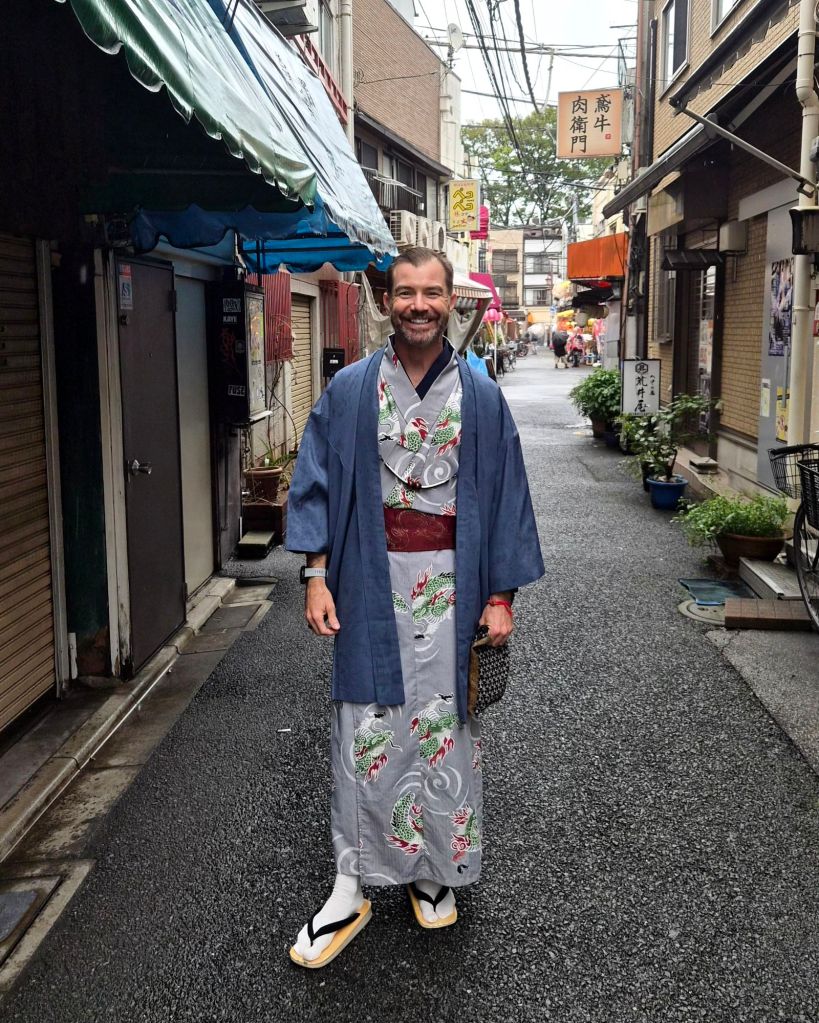
I’ve been in Japan ten days, and unlike most of this Asian journey, I’ve had something planned nearly every day.
What’s interesting, though, is that on a couple of occasions there might only be one thing on the calendar, and somehow that turns into an entire eight-hour block of discovery. Oh, this neighborhood looks great. Where to next? Oh, this looks interesting. What’s down there? A 30-minute adventure turns into an all-day affair.
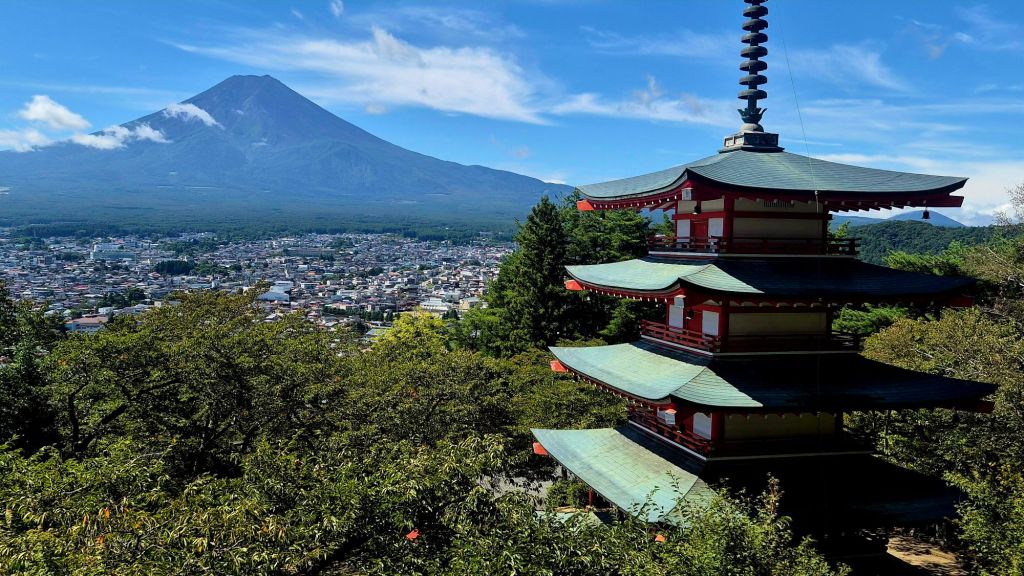
Then there was the planned trip to Mount Fuji from Tokyo, about three hours each way with multiple train transfers—not to mention getting off at the wrong stop a time or two. Or maybe more times than I’d like to admit.
It’s a good thing my lifelong habit of if you’re not ten minutes early, you’re late has turned into leave 30 minutes early in Tokyo and you still might barely make it on time.
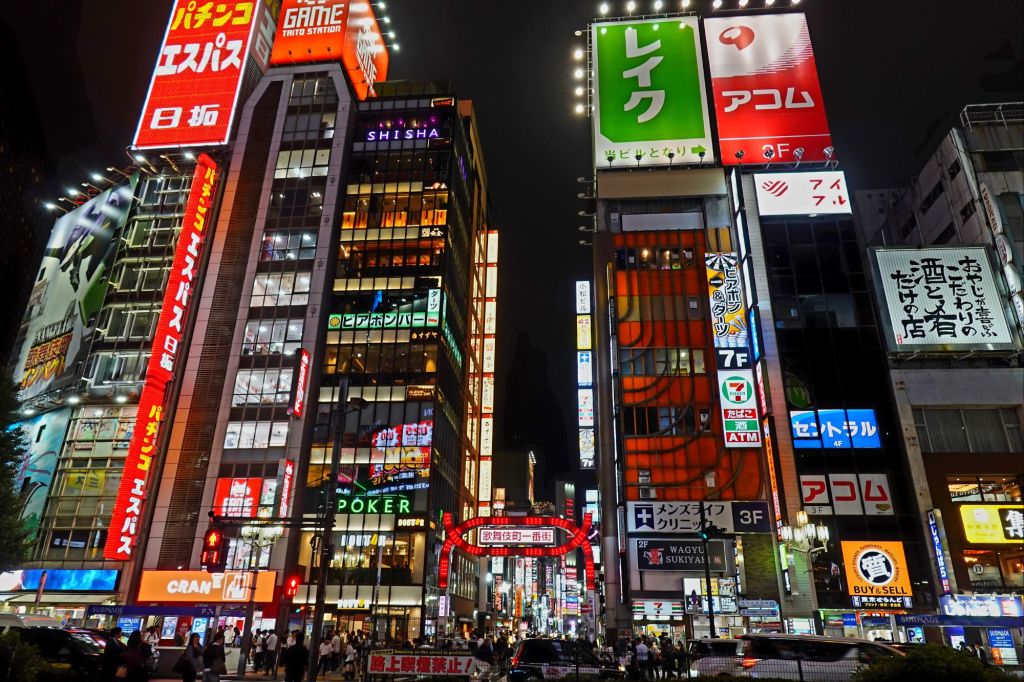
In ten days, I’ve explored Shinjuku, Shibuya, Shirokane, Asakusa, and a handful of other neighborhoods, from old streets and traditional buildings to the polished walkways of Ginza, where passing Louis Vuitton and the other high-end stores makes it feel like money is falling out of your pocket just for walking down the sidewalk.
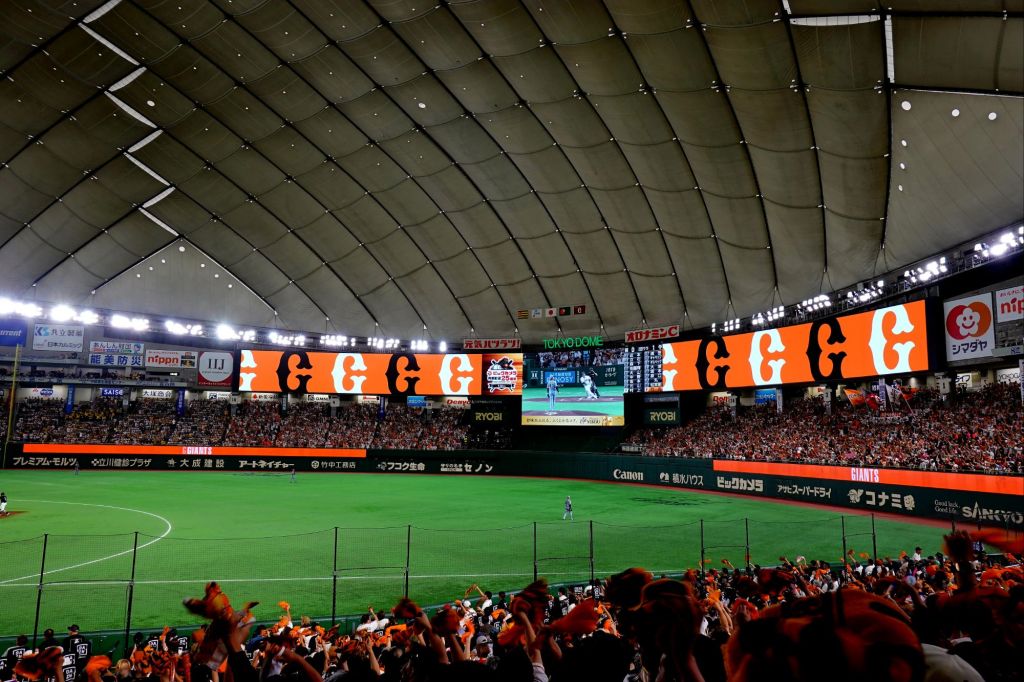
I’ve already been to two baseball games: Giants versus Tigers at the Tokyo Dome, and last night, Swallows versus Hiroshima. Without a doubt, Japanese baseball fans take the cake for being among the most passionate and fun crowds I’ve experienced in any sport. The singing, chanting, flags, coordinated cheering—it never stops. Baseball was one of the main reasons I wanted to come to Japan, and it has delivered.
But somehow, among all the high-rises, shining lights, trains, baseball games, and carefully planned excursions, one of my favorite experiences happened today—and it was probably the simplest one.
It was raining when I woke up, and I wasn’t even sure how I wanted to attempt the day. Backpack? Cameras? Umbrella? I eventually ditched the backpack, put the camera in my pocket, grabbed the clear umbrella, and headed out. Thankfully. The umbrella stayed over my head most of the day, and the camera in my pocket ended up being exactly what I needed.
On paper, today’s plan wasn’t much: a 90-minute traditional tea ceremony in Asakusa, where I’d be outfitted in a kimono beforehand. I figured I’d do the ceremony, walk around for maybe 30 minutes afterward, take a few photos, and call it a day.
Instead, it became one of the most unexpectedly memorable days I’ve had in Japan.
Before the ceremony, I was outfitted head to toe in a traditional kimono that I chose myself. Then we were escorted into a quiet room with immaculate grass-woven tatami floors, where our places had already been prepared and small sweets were waiting for us.
Every phase of the ceremony was an event of its own. Everything required attention and respect. Bowing. How to hold the bowl. How to whisk the matcha with that quick swoosh, swoosh of the bamboo whisk. How to properly turn and hold the bowl before drinking. Even the final, mildly audible slurp signaling that you’d finished.
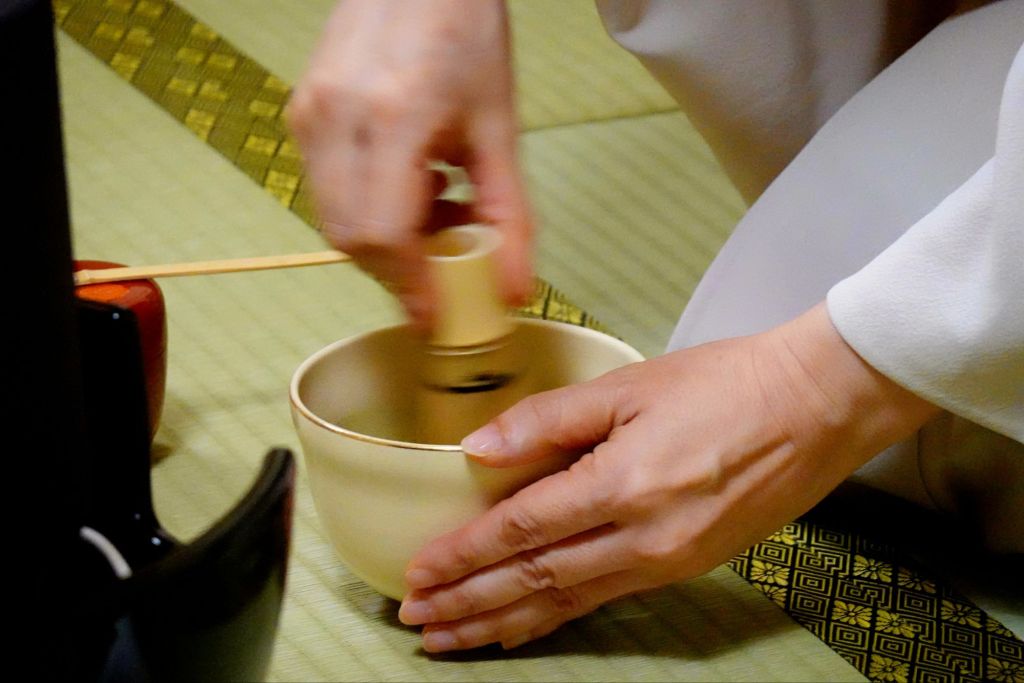
Nothing was rushed.
Nothing seemed accidental.
Afterward, we were given the option to keep wearing our kimonos and walk around Asakusa.
Sure. Why not?
The first 15 minutes felt really weird.
I was walking through the streets of Asakusa wearing something completely foreign to me, and I was very aware of myself. But then I started asking strangers to take photos. A few people passing by smiled. One woman told me, “You’re rocking that thing.”
And somewhere along the way, the self-consciousness disappeared.
Something else disappeared with it, too.
For a few hours, some of the identities I normally carry around seemed to fall away. American. Foreigner. Traveler. Whatever else I usually attach to myself.
I was simply there.
Walking through Asakusa in the rain, wearing the same traditional clothing I was seeing all around me.
Eventually I reached Sensō-ji and noticed how many other people were dressed in kimonos—some clearly tourists, others perhaps locals. And for a moment, I didn’t feel like I was observing Japan from the outside.
I felt like I was participating in it.
I felt like I was exactly where I belonged.
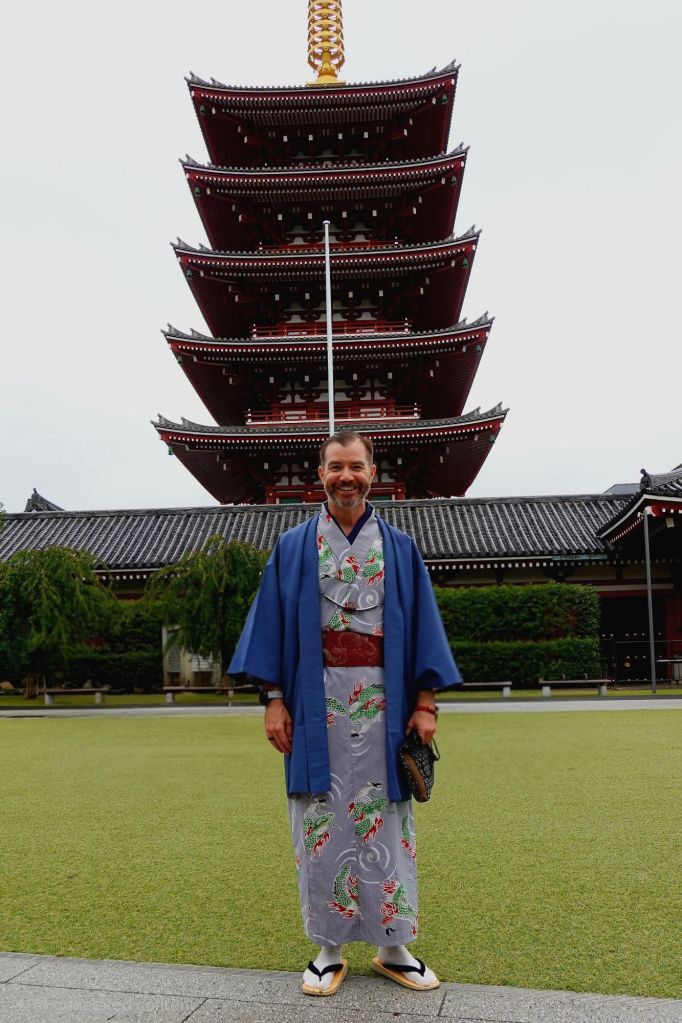
What had started as a 90-minute tea ceremony, maybe walk around for 30 minutes afterward turned into: This feels amazing. I don’t want it to end.
So I didn’t end it.
I kept walking.
Then I got hungry.
That conveyor-belt sushi restaurant looks good. Let’s go!
I walked in still wearing the kimono, and the entire restaurant seemed to greet me—not just someone at the door, but voices coming from everywhere, front to back. I was shown to a seat right beside the chef, who regularly checked on me and asked whether I wanted any fresh fish.
And afterward, I just wandered.
No destination. No schedule. No need to get anywhere.
I walked slower than usual. Looked left. Looked right. Smiled. Chin up. Shoulders back. Clear umbrella overhead.
Just this strange, wonderful feeling of freedom through immersion.
Sometimes the simplest experiences leave the most unexpected imprint.
Because when I look back on today, what made it so good wasn’t really the kimono, the matcha, the sushi, the temple, or even Tokyo.
It was the now.
For those few hours, I wasn’t thinking about the sumo championship tomorrow. I wasn’t thinking about the bullet train to Osaka the day after. I wasn’t replaying something that happened yesterday or wondering what comes next.
There was nowhere else I needed to be.
And maybe that’s why it became so much better than I could have planned. There wasn’t an expectation for it to live up to. I had given the afternoon almost no responsibility whatsoever—and it gave me something I’ll probably remember long after some of the bigger, more elaborate adventures have faded.
I’ve spent much of these ten days in Japan moving. Trains. Neighborhoods. Baseball games. Fuji. Reservations. Tour times. Wrong stops. Right stops. Plans that became other plans.
And yet one of the best afternoons came from having almost nowhere to be.
Tokyo felt overwhelming ten days ago.
Now, with only two days left here, I feel like I’ve done it right—not because I conquered Tokyo or figured the city out, but because somewhere along the way I stopped needing to.
I came here largely because I wanted to experience Japanese baseball.
I got that and a heck of a lot more.
So, in the spirit of baseball, I think it’s fair to say:
Tokyo, I knocked this one out of the park.
 Tom Pryjda.com
Leave a comment